Congruent triangles are a fundamental concept in geometry that unlocks a whole world of geometric possibilities. Understanding how to identify and work with congruent triangles is essential for any math student, teacher, or enthusiast. With the right tools and techniques, anyone can master the art of working with congruent triangles and unlock the secrets of geometry.
What Are Congruent Triangles?
Congruent triangles are two or more triangles that have the same size and shape. This means that if two triangles are congruent, they will have the same length and angle measurements, whether it's the length of the sides or the measure of the angles between them.

Why Are Congruent Triangles Important?
Congruent triangles are used in a variety of mathematical and real-world applications. They're essential for calculating distances, angles, and volumes, and are used in fields like engineering, architecture, and physics. In addition, congruent triangles are a key concept in many mathematical theorems and proofs, making them a fundamental building block of mathematics.
Types of Congruent Triangles
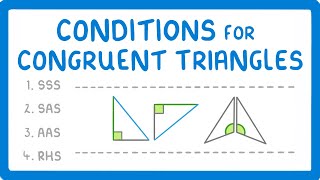
There are several types of congruent triangles, including SSS (side-side-side), SAS (side-angle-side), ASA (angle-side-angle), and AAS (angle-angle-side). Each of these types has its own set of criteria for determining congruence, and understanding the differences between them is crucial for working with congruent triangles effectively.
Key Properties of Congruent Triangles
Conrguent triangles have several key properties, including:
- Equal side lengths: Congruent triangles have the same length sides, which means that if you were to superimpose one triangle on top of the other, their sides would align exactly.
- Equal angle measurements: Congruent triangles also have the same angle measurements, whether it's the angle opposite a side or the angle between two sides.
- Corresponding angles: Corresponding angles in congruent triangles are equal, and the corresponding sides are parallel.
Using Congruent Triangles in Real-World Applications
Congruent triangles are used in a variety of real-world applications, including:
- Architecture and engineering: Congruent triangles are used to calculate distances, angles, and volumes, making them essential for designing buildings, bridges, and other structures.
- Physics and engineering: Congruent triangles are used to describe the motion of objects and to calculate quantities like kinetic energy and momentum.
- Computer graphics: Congruent triangles are used to create three-dimensional models and to render textures and lighting effects.
Mastering Congruent Triangles
Mastering congruent triangles requires practice, patience, and persistence. Start by understanding the basic concepts and properties of congruent triangles, and gradually build your skills by working with increasingly complex examples. With time and practice, you'll unlock the secrets of geometry and be able to apply congruent triangles in a variety of real-world applications.