Designers and small‑business owners increasingly rely on online color palette generators to cut hours of trial‑and‑error. By feeding a seed color or a visual theme into these tools, users receive harmonious, export‑ready swatches that can be applied to websites, branding, and social media graphics within minutes. The surge of free and low‑cost options has turned what used to be a specialized skill into a routine step in any visual workflow.
How do random color palette generators work, and why does randomness matter?
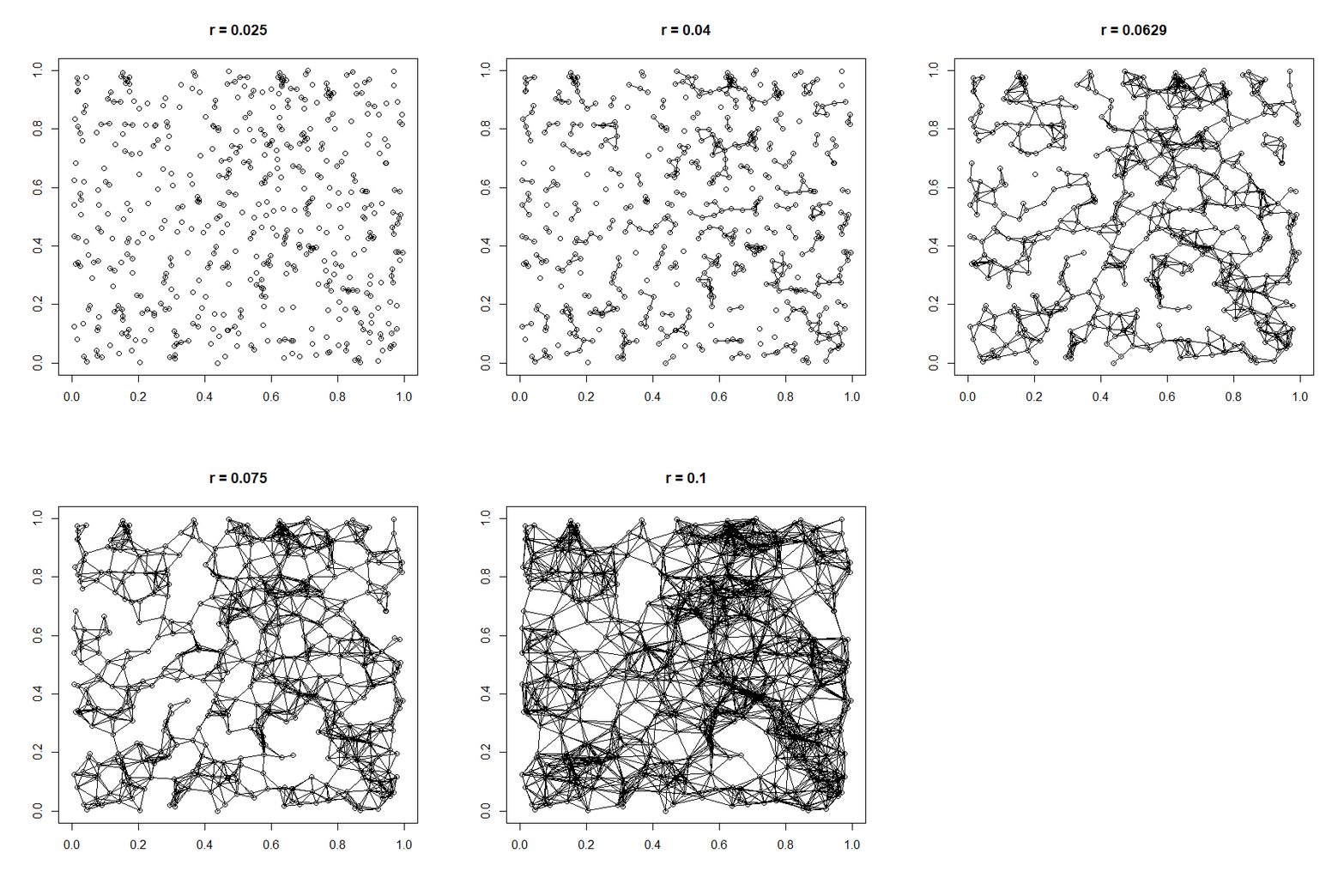
Most generators start with a base hue and apply algorithmic rules—such as complementary, triadic, or analogous relationships—to produce a set of colors. Some tools, however, lean on stochastic methods that sample points in a color space, similar to the way a random geometric graph connects nodes based on proximity. This approach yields unexpected pairings that often feel fresh and modern.
When is a random palette generator the right choice for a project?
Randomized palettes shine in scenarios where originality trumps strict brand guidelines. Consider a local coffee shop launching a seasonal menu; a quick, unpredictable mix can inspire signage, latte art, and Instagram stories that stand out from competitors. Similarly, freelance designers creating mood boards for client brainstorming sessions benefit from a fast influx of options that spark conversation.
- Brand refreshes with limited direction: When a client can’t articulate a desired look, a generator offers a visual starting point.
- Social media campaigns: Rapidly producing on‑brand yet varied colors helps keep feeds lively.
- Prototyping UI components: Developers can plug generated swatches into style guides to test contrast and accessibility early.
What criteria should users apply when selecting a palette generator?
Not all tools are created equal. Evaluate them against the following practical benchmarks:
- Export flexibility: Does the tool provide CSS, HEX, RGB, and SCSS formats? Seamless copying saves time.
- Accessibility preview: Built‑in contrast checks ensure compliance with WCAG standards, crucial for public‑facing designs.
- Customizable randomness: Options to lock certain hues while randomizing others give finer control over the output.
- Integration ecosystem: Direct links to design software like Figma or Adobe XD streamline workflow adoption.
Can random palette generators help with data‑driven design decisions?
Beyond aesthetic experimentation, some platforms incorporate statistical models that mimic the convergence of random variables. By treating color selection as a distribution, these tools can suggest palettes that balance novelty with proven visual harmony—much like the way a convergence diagram illustrates the stability of summed uniform variables over repeated trials.

What practical steps can users take to integrate a generator into their daily workflow?
Start with a quick audit: identify projects where color choice stalls the process. Choose a generator that meets the criteria above and set a daily “palette sprint” of 5 minutes. Export the swatches, apply them to a mockup, and note any friction points—such as insufficient contrast or mismatched brand tones. Over a week, refine the selection by toggling randomness controls and re‑exporting, turning a one‑off experiment into a repeatable habit.
Where do we see the future of random color palette generators heading?
Artificial intelligence is already enabling generators to learn from a brand’s existing assets, suggesting palettes that honor legacy colors while injecting fresh variations. As cloud‑based design suites deepen their APIs, expect seamless palette syncing across project files, version histories, and even real‑time collaboration tools. For everyday creators, this means even less manual tweaking and more focus on delivering compelling visual stories.
Convergence Of Random Variables - Wikipedia

Convergence of random variables - Wikipedia


![NEW Accessible Color Palette Generator [100% FREE] | Venngage](https://i.ytimg.com/vi/8dEzGfzPupY/mqdefault.jpg)


